What happens in a child’s brain during a story?
When a child hears a story, they build the scene in their own mind. Preschoolers who are read to more at home show stronger activity in brain areas for mental imagery and understanding stories, even when they are only listening.
In this study, children aged 3 to 5 listened to stories in an MRI scanner with nothing to look at. Those from homes with more reading showed more activation in a left-hemisphere region that supports mental imagery and narrative comprehension (Hutton et al., 2015). Every bedtime story is practice for that skill.
Why are illustrated stories “just right”?
Researchers compared the same stories as audio only, as an illustrated picture book and as a cartoon. The picture book was the sweet spot: illustrations helped children follow the story, while their own imagination still did the work. The team called it a Goldilocks effect.
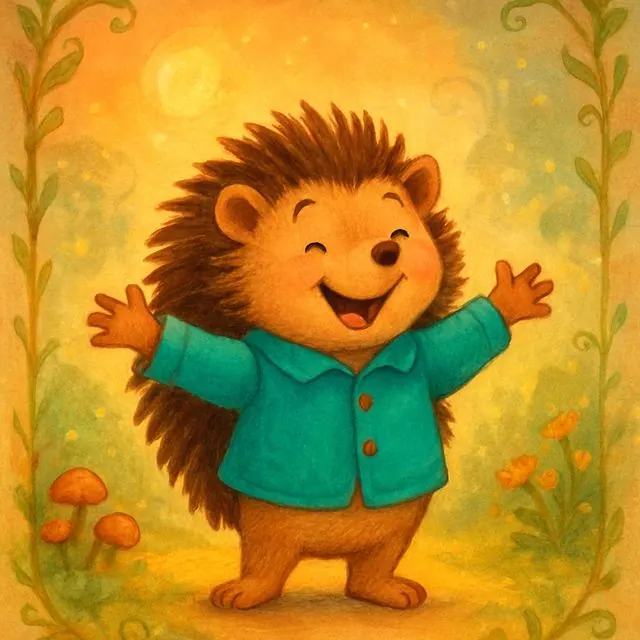
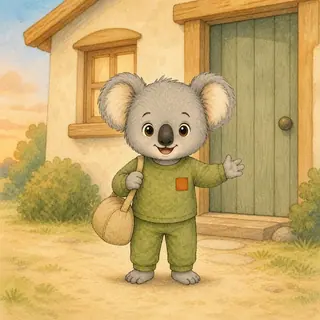
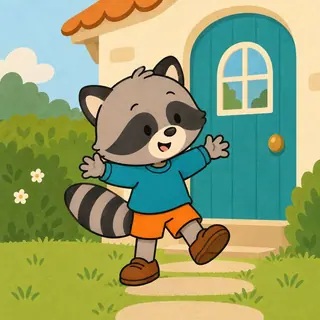
With pictures, the language network didn’t have to strain as hard as with audio alone, and brain networks stayed better connected than during the animated version (Hutton et al., 2020). That is the format of every Luna story: one still illustration and a page of words, read aloud by you.
Illustrated stories are “just right” for young children: pictures support understanding, and the child’s imagination does the rest.
How many words does a bedtime story add?
A lot. One picture book a day adds up to about 290,000 more words heard by kindergarten than a child who is never read to. Five books a day add about 1.4 million. Book language is also richer than everyday talk, full of words children rarely hear in conversation.
Ohio State researchers counted the words in the most-borrowed picture books and combined them with reading habits (Logan et al., 2019). A bedtime story is the easiest daily slot to make that happen.
Why is reading together better than listening alone?
Because of the conversation. When parents asked open questions and built on their toddlers’ answers while reading, the children’s spoken language ran about six months ahead after just one month. The story is the starting point; the talk is where the learning grows.
This technique, called dialogic reading, was tested by Grover Whitehurst and colleagues (Whitehurst et al., 1988). Our guide to reading aloud so children talk back shows how to do it in two minutes at bedtime.
What changes when your child is the hero?
Children engage more. In studies of personalised books, preschoolers learned new words more readily from the parts of the story that were about them, and they talked and smiled more while reading.
That research is by Natalia Kucirkova and colleagues (Kucirkova, Messer & Sheehy, 2014). In Luna, every story uses your child’s name for the hero. Read more in personalised bedtime stories.
Why does a story every night matter?
Because routines work best when they happen most nights. In a study of more than 10,000 families in 14 countries, every extra night a week with a consistent bedtime routine went with falling asleep faster, waking less and sleeping longer. A story is the step children look forward to most.
Source: Mindell et al., 2015. The World Health Organization agrees on the bigger picture: for every child under 5, “reading and storytelling with a caregiver is encouraged” (World Health Organization, 2019).
How does Luna keep a story a story?
Luna is built like a picture book, not a video app. Each page is one still illustration and a few lines of text that you read aloud, and every story ends with “The End”, a sticker, and lights out.
- Still illustrations and a page of words. No animation and no narration: your voice tells the story.
- Every story ends. No feed, no autoplay, no ads.
- Your child is the hero, so every page invites “What would you do?”
- A calm night-sky design, with soft optional music that mutes with one tap.
On tired nights, pick a short one. The shortest stories in Luna right now: Wise Bird, The Ant and Responsibility, The Cat Who Saved the Day. Or make the switch gently with our 7-night plan from bedtime videos to bedtime stories.